Markets

Who this is for.

Every industry got connected except the ones that build everything else. These are the operations ORB was built for, and the shape the solution takes in each one.

What they have in common.

The markets differ in what they weight. The condition that creates the need is the same everywhere.

  • Remote or temporary, so permanent infrastructure was never built for it.
  • Spread across real distance, so a hotspot at the trailer was never going to cover it.
  • Increasingly run on data: plans, scans, telemetry, and safety signaling.
  • Unserved by networks designed around population density.

Four markets we lead with.

Each one starts with a real site, a real hour of the day, and the problem that shows up there. Then what deploys, and what changes.

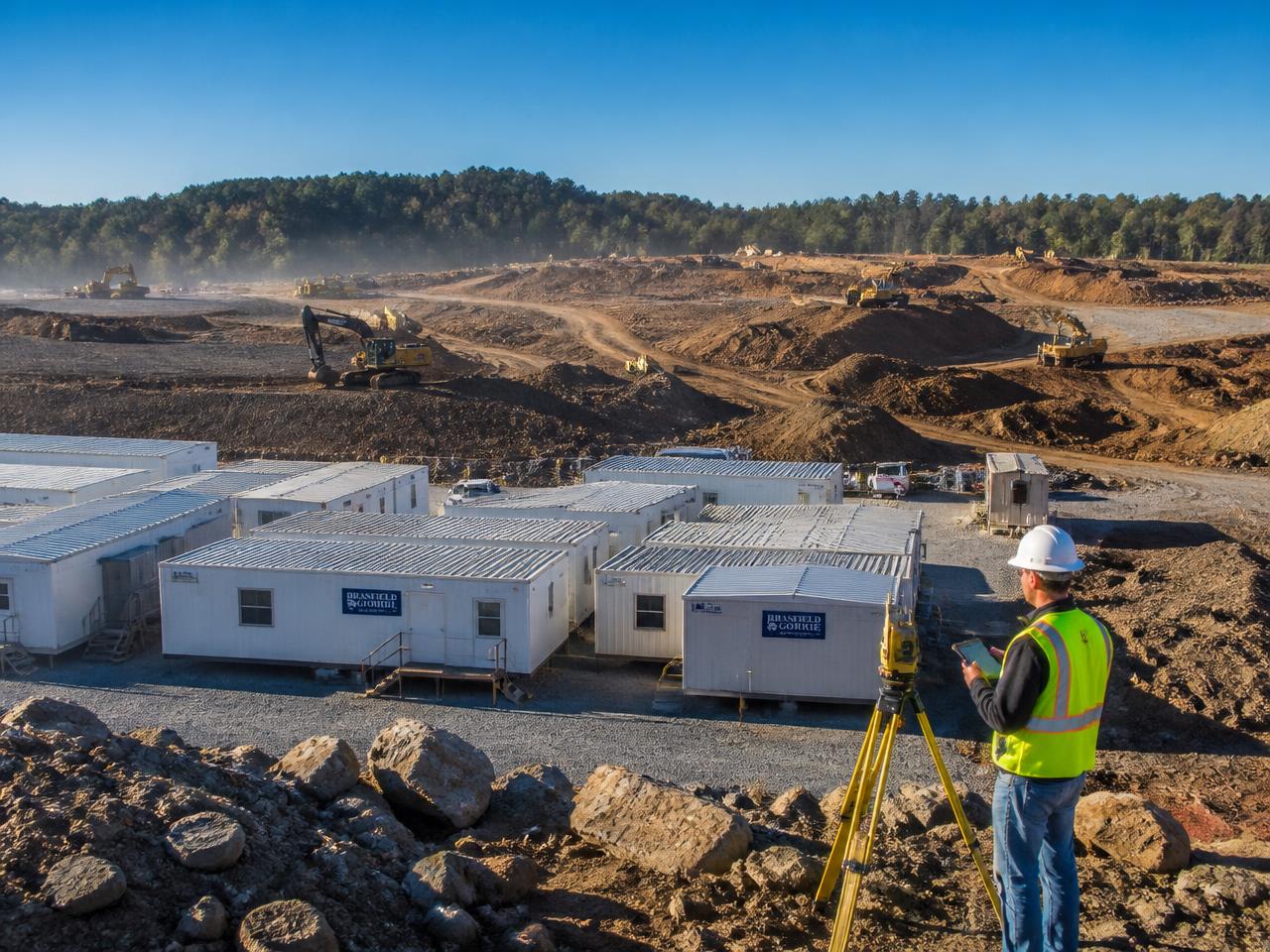
Site office trailers in the foreground of a large earthworks construction site with excavators working the pad

Construction

A 40-acre earthworks job, month three

The trailer cluster sits at the gate. The pad is a half mile out. The survey crew has 12 GB of drone capture to push before the 7am coordination call, four subs are on personal hotspots, and the grade-control system on the far dozer has been offline since Tuesday.

What deploys
An ORB at the trailer cluster, Oasis machine-mount kits on the fleet, and a Smart Trailer where the job is below ORB scale.
What it delivers
Site-month connectivity with no licenses or carrier contracts, coverage that follows the fleet, and an autonomy-ready network from day one.
4 Gbps
at the trailers
Day 1
network live
12
sub slices
Read the full case study
Build
One ORB-1 on a 15 m trailer mast, LEO terminal in the WAN bay on day one, wired handoff swapped in when the permanent service lands in month five. Eight Oasis machine-mount kits, two portable kits for the survey crew.
Rollout
Crate to coverage inside a morning: mast up, unit powered, authorizations pulled from the coordination databases automatically, Wi-Fi and CBRS live before the afternoon pour.
Day-to-day
Uplink-heavy TDD carries the 12 GB capture in minutes, grade control rides the machine-mounted CPEs across the pad, and each trade joins its own slice with Passpoint instead of a shared password.
Commercial
Priced as a site-month against the job's general conditions, moved to the next job when this one closes out, with no licenses and no carrier contract in the chain.
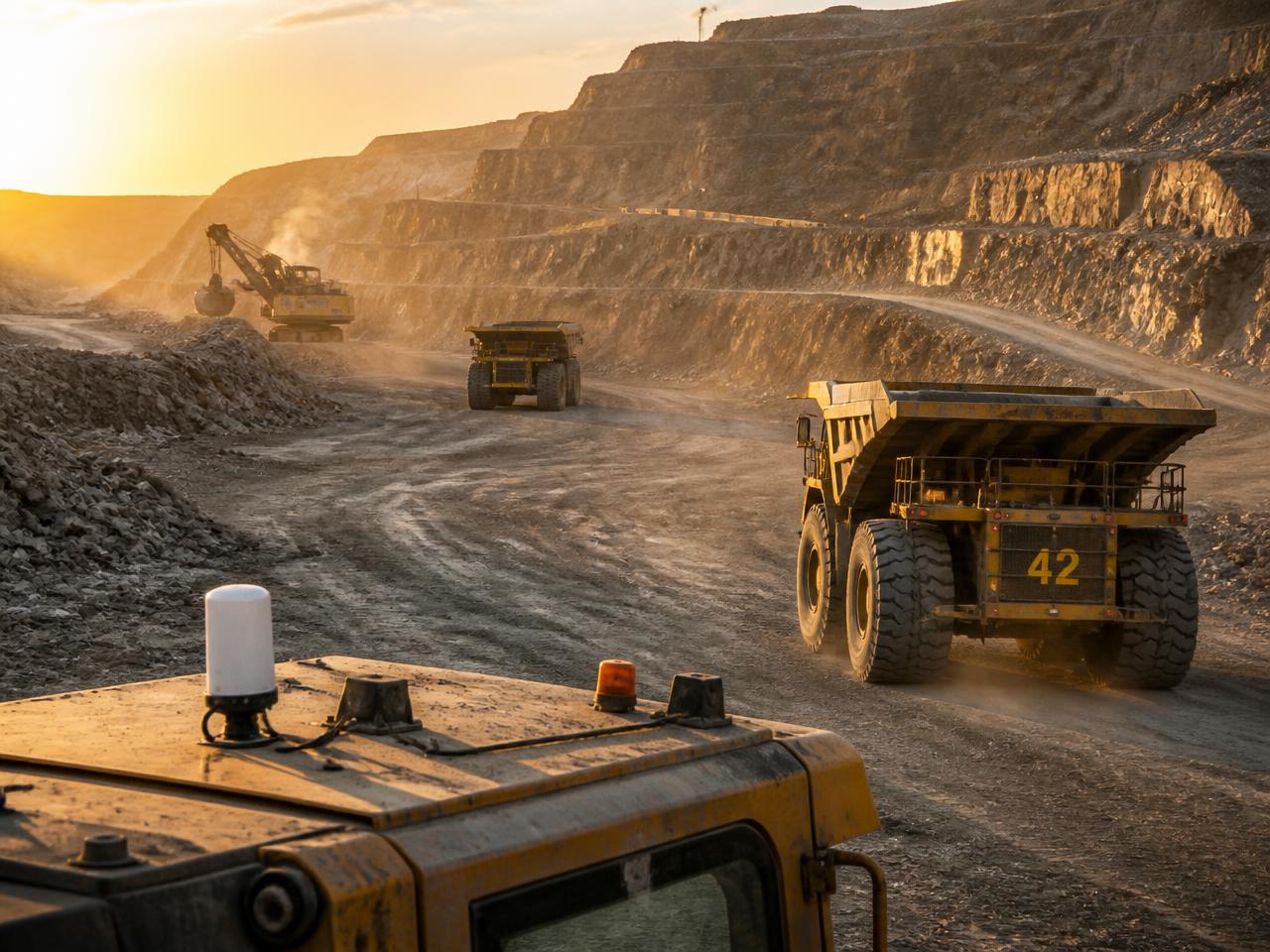
Haul trucks and an excavator working the terraced benches of an open-pit mine at golden hour

Surface mining

A pit running autonomous haulage, 24 hours a day

Benches drop 180 meters, haul roads change weekly, and the integrator-built private LTE that covers the pit rim was quoted in six figures and re-engineered every time the face moved. The safety case has to be documented, not asserted.

What deploys
Flagship ORBs on the pit rim, Oasis on every machine, and the NR+ deterministic tier carrying fleet command and control.
What it delivers
A replacement for integrator-built private LTE, a safety fabric that shares no fate with bulk data, and a tamper-evident audit trail.
<5 ms
safety signaling
No
RF re-engineering
Every event
on the ledger
Read the full case study
Build
Two federated ORBs on the pit rim covering opposing benches, an Oasis on every haul truck, dozer, and light plant, and TVWS tails to the crusher and the far ramp.
Rollout
The second unit federates with the first by peering, not by re-planning: spectrum, mobility, WAN, ledger, policy, and compute coordinate between them, so a bench extension is a mast move rather than an RF project.
Day-to-day
DECT NR+ on the reserved 1.9 GHz band carries work-zone deconfliction, haul-road intersection negotiation, and E-stop class propagation machine to machine, and keeps running when a base station is unreachable.
Assurance
Every authorization, every device, and every location is recorded tamper-evident, so the safety case is queryable by the operator, the OEM, the insurer, and the regulator instead of asserted in a binder.
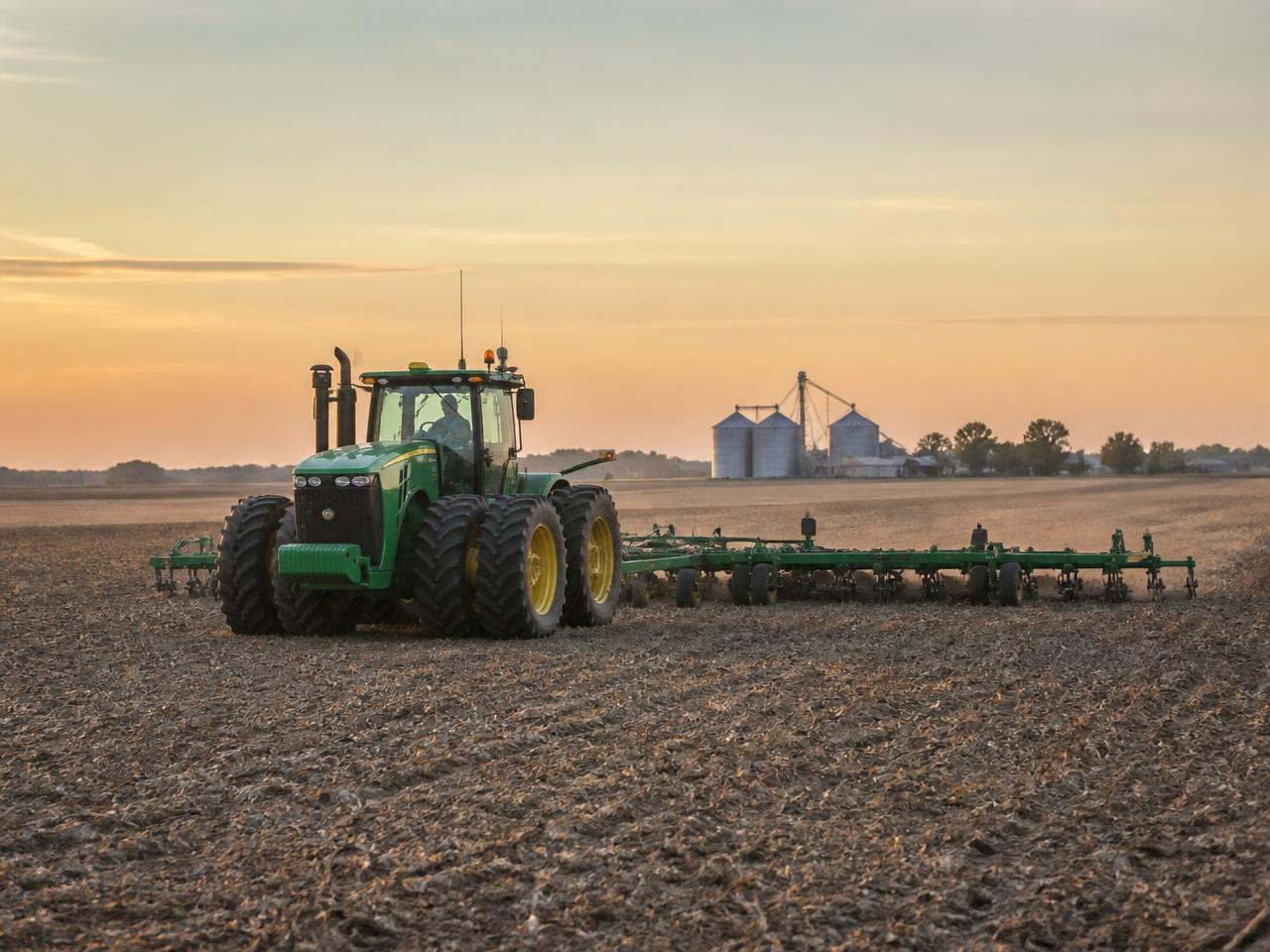
A tractor pulling a wide implement across a vast field at dawn with grain silos on the horizon

Agriculture

Nine thousand acres, one yard, no towers

Autonomy is arriving on the tractor line, the soil-moisture sensors report once a day over a cellular plan per node, and the operator's own house is on the wrong side of the broadband map. Low structure density means low-band propagation is excellent and unused.

What deploys
TVWS-led ORB coverage from the yard, Oasis on tractors and implements, HaLow sensor fabric across the fields.
What it delivers
An owned farm network instead of a rented one, with incidental rural fixed-wireless coverage for the operation's own housing.
10+ km
from the yard
0
per-sensor plans
Owned
not rented
Read the full case study
Build
One ORB on the yard's grain-leg mast leaning on TVWS for reach, Oasis kits on the tractors and the sprayer, HaLow endpoints on moisture, tank, and gate sensors.
Rollout
Low structure density and clean low-band propagation mean the tail tier reaches the far quarters at reduced capacity but never at zero, so the whole operation is inside one coverage envelope from a single mast.
Day-to-day
Autonomy and guidance data ride the machine CPEs, sensors report continuously instead of once a day, and the yard shop pulls service documentation at campus speed.
Commercial
Capitalized like a piece of equipment rather than rented monthly, with the farmhouse and shop picking up fixed wireless from coverage the operation already paid for.
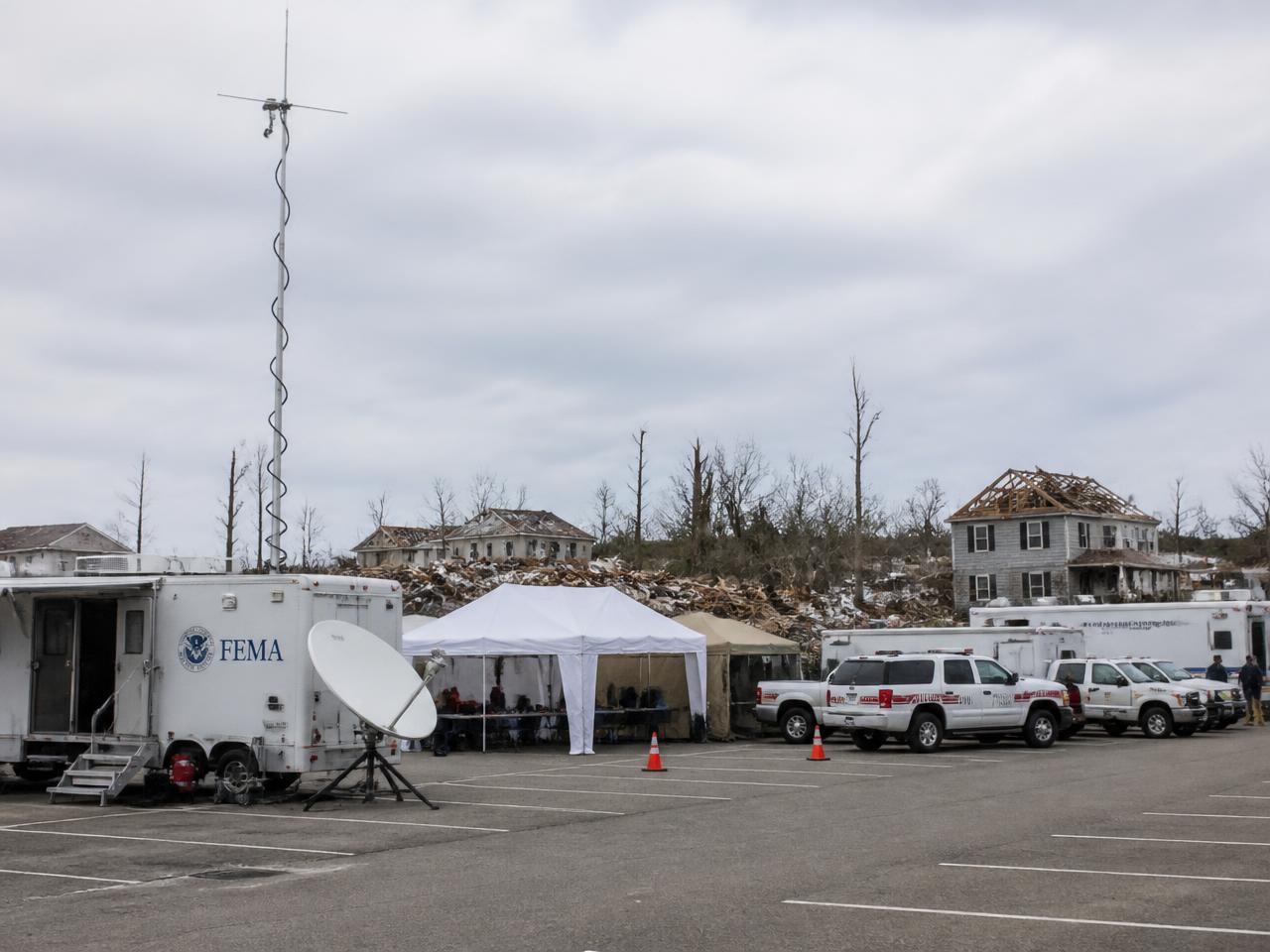
Emergency response vehicles, tents, a portable antenna mast and a satellite dish at a disaster relief staging area

Public safety and disaster relief

Hour six after the storm, staging area stood up

The grid is down, the macro network is down, and satellite terminals are arriving by the pallet. Each one serves the building it sits beside. Five agencies are on scene, survivors are walking in to ask for a phone signal, and every hour of the response has to be reconstructable afterward.

What deploys
Pre-positioned deployables, per-agency network slices, and multi-WAN backhaul over satellite or whatever survives.
What it delivers
Coverage standing up in a morning, every agency on its own carrier and its own slice, a complete incident record, and the distribution tier for LEO relief operations. Entry runs through FEMA-adjacent grant and resilience budgets that already fund deployables.
1 dish
serves the community
One morning
to coverage
Per agency
isolated slices
Read the full case study
Build
A pre-positioned deployable ORB on a towable mast at the staging area, one LEO terminal in the WAN bay, portable Oasis kits pushed to forward posts and shelters.
Rollout
Coverage stands up in a morning with no site survey and no spectrum coordination call: authorizations come from the governing databases, and the unit works with whatever WAN survived.
Day-to-day
CBRS neutral host and Passpoint put survivors' phones back on their own carriers, each agency runs an isolated slice with its own authentication and priority, and responders hold the deterministic tier for life-critical traffic.
Commercial
Funded through FEMA-adjacent grant and resilience budgets that already pay for deployables, and it multiplies satellite terminals rather than competing with them.

And the pattern beyond them.

Grouped by which part of the architecture does the work, because that is what actually determines the deployment.

Market patterns and the architecture that serves them
PatternOperationsWhat carries itWhat changes on site
Linear corridorsPipeline construction and inspection, rail maintenance-of-way, highway programs, transmission-line constructionTransport tier plus long-range tail bandsCoverage that walks the corridor with the crew instead of stopping at a tower
Area operationsSolar and wind construction and O&M, forestry and logging, quarries and aggregates, large ranches, aquacultureCoverage ladder plus fleet-as-networkCoverage concentrates where the machines are, because the machines are the activity
Temporary surgesUtility storm restoration and mutual-aid staging, large events and festivals, film and broadcast on locationZero-touch commissioning plus multi-WANA network that exists hours after arrival and leaves with the crew
Permanently underservedTribal lands and rural communities, marinas, campgrounds, remote hospitalityOpen-spectrum economicsService where licensed economics never closed, on the Compact SKU or a Smart Trailer
Defense-adjacentBase construction, defense logistics sites, disaster responseDeconfliction and emissions disciplineThe same platform where spectrum discipline and provenance are procurement requirements

Satellite and the underserved

Internet to anywhere. Network for everyone there.

LEO constellations supply the anywhere-WAN, and the relationship is complementary by construction: LEO delivers internet to a point, and the ORB turns the point into a place.

In disaster relief this is the visible gap of recent operations, where terminals arrive by the hundreds and each one serves the building it sits beside. An ORB with one terminal in its WAN bay serves the community around it: every survivor's phone on its own carrier, responders on the deterministic tier, coverage into the terrain the towers left dark, and federated staging areas sharing one uplink.

The platform multiplies what a terminal delivers rather than competing with the constellation, which makes it the natural distribution tier for LEO relief and remote-connectivity operations. It stays deliberately vendor-neutral across providers. The WAN bay is a mount and a policy, not an alliance.

The same architecture serves the places conventional network economics never reached: tribal lands and rural communities, where the platform is a WISP-in-a-box with a coordination ledger, and marinas, campgrounds, and remote hospitality at the small end through the Smart Trailer. Disaster relief and underserved connectivity belong in one account, sharing funding channels and architecture, procured through pre-positioned county and state caches.

Outside the United States the same argument travels through a licensed floor rather than a shared one: band n53 at 2483.5 to 2495 MHz is held by a single terrestrial counterparty worldwide, handset-native on current phone silicon, and lets one agreement replace ninety regulators. It is an option on the panel, not a dependency of the platform.

One product family, every market.

There is no per-market version of the platform. The SKU matrix and the policy layer of the coordination plane absorb the differences, which is why a dozer in a pit and a tractor in a field run the same firmware.

  • Flagship ORB for full-site coverage and the longest reach.
  • Compact ORB where the site or the budget is smaller.
  • Oasis kits, machine-mount, fixed-mount, and portable, for coverage at the point of work.
  • Smart Trailer for jobs below ORB scale, including standalone with no ORB present.

Tell us what you run.

Describe your sites and your fleet and we will scope the deployment, or stage a pilot on a live job.